
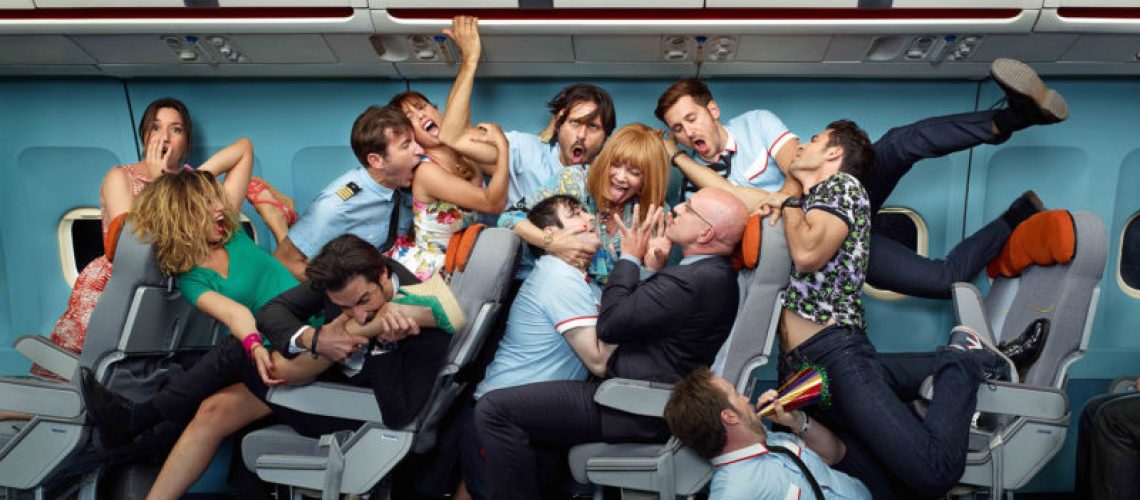
Unruly passengers are a real issue across the industry, especially in low-cost operations. Alcohol, stress, and frustration sometimes turn into aggression, and the crew are the first to deal with it. Diverting an aircraft is never taken lightly, as it creates major operational and financial disruption, but when safety is at risk, it remains the only option.
Airlines have publicly called for stronger action against disruptive passengers, including bans and legal action.
Read More: FPU Romania welcomes Ryanair’s action on disruptive passengers
Recently, one of our members was assaulted by a passenger during landing while carrying out standard safety procedures. The passenger was blacklisted and later faced criminal consequences. The crew member was summoned to court as the injured party, a mandatory step in such cases. To protect him, we are using an alias.
Interview with Tom (Alias)
What happened on the flight?
During landing, while standard procedures were being followed to secure the cabin, a passenger who was under the influence of alcohol did not comply with basic safety instructions, such as wearing a seatbelt. As cabin crew, we are trained to de-escalate conflicts and manage difficult behavior, but there are situations where passengers become verbally aggressive, make serious threats, and, in this case, even physically assault a crew member.
How did the situation affect you after the flight?
This is not something anyone expects to experience on an aircraft. The threats were already worrying at the time, but the impact became clearer the following day when I returned for another flight. I felt anxious and kept replaying the incident in my head. Knowing that serious threats had been made stayed with me, and it was difficult to shake off. I was later summoned to court as part of the criminal case, which is mandatory. It was stressful, but I felt it was important to see it through.
Are you satisfied with the outcome of the case?
Yes. The passenger was banned from flying and received four months of house arrest. It also shows that these cases are taken seriously and that there can be real consequences. There is also the possibility of claiming personal damages in cases like this, which many crews do not even know about.
Do crew talk about passenger violence among themselves?
Yes, very often. Most crew have either experienced it or know someone who has. It is a real issue on Eastern European flights, and it helps when people see that reporting leads to action.
Cabin crew are trained safety professionals, not just service staff. At 10,000 meters altitude and close to 900 km per hour, an aircraft is no place for physical or verbal violence.
The bottom line is that when passengers cross that line, the consequences are serious for the crew, for the flight, and increasingly, for the passengers themselves. For us as a union, this case shows something important: violence or abuse towards crew does not just vanish. It can and should have real consequences.
At the same time, we want to make sure our members are properly supported when things go this far. We have raised some concerns with the company and asked for clear support when the crew are exposed to violence and have to deal with legal follow-up.
Going forward, we expect the airlines to handle these situations in a way that shows crews they are not on their own, including access to peer support when needed.
